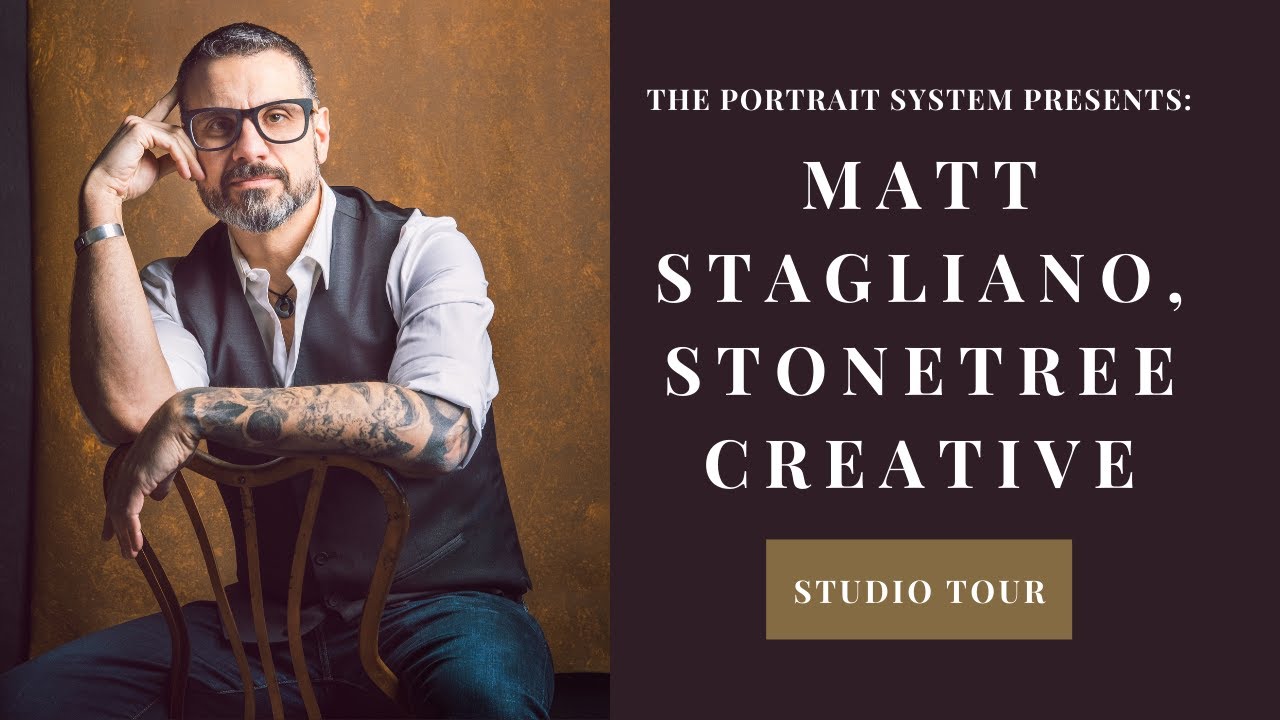
There’s a version of a photography career that looks like a straight line. You study it in school, you assist someone, you go out on your own. That version has never matched anyone I’ve actually met. The photographers who stick around, the ones building real studios and real client relationships, almost always arrived sideways. I learned Lightroom because my band couldn’t afford to hire anyone to edit our press shots, and someone had to do it. That’s not a career plan. That’s a problem that needed solving.
In this The Portrait System tutorial, photographer Matt Stagliano of Stonetree Creative opens up his studio in Bethel, Maine, and walks through not just the physical space, but the winding, honest path that got him there. Watch the full tutorial on YouTube before or after reading this breakdown. Stagliano’s studio is housed in a converted mechanics garage, complete with original bay doors that flood the interior with natural light. It’s an unlikely venue for a portrait photographer. That’s exactly the point.
What makes this tour valuable isn’t a gear list or a lighting diagram. It’s the framework underneath, the decisions Stagliano made about what kind of photographer he wanted to be, and how he got there through about a dozen careers, a layoff, and a deliberate pivot toward work that actually felt meaningful. If you’re thinking about opening a studio, changing your niche, or wondering whether any of this is worth it, this video is worth your hour.
Step 1: Start With the Space You Have, Not the Space You Imagine
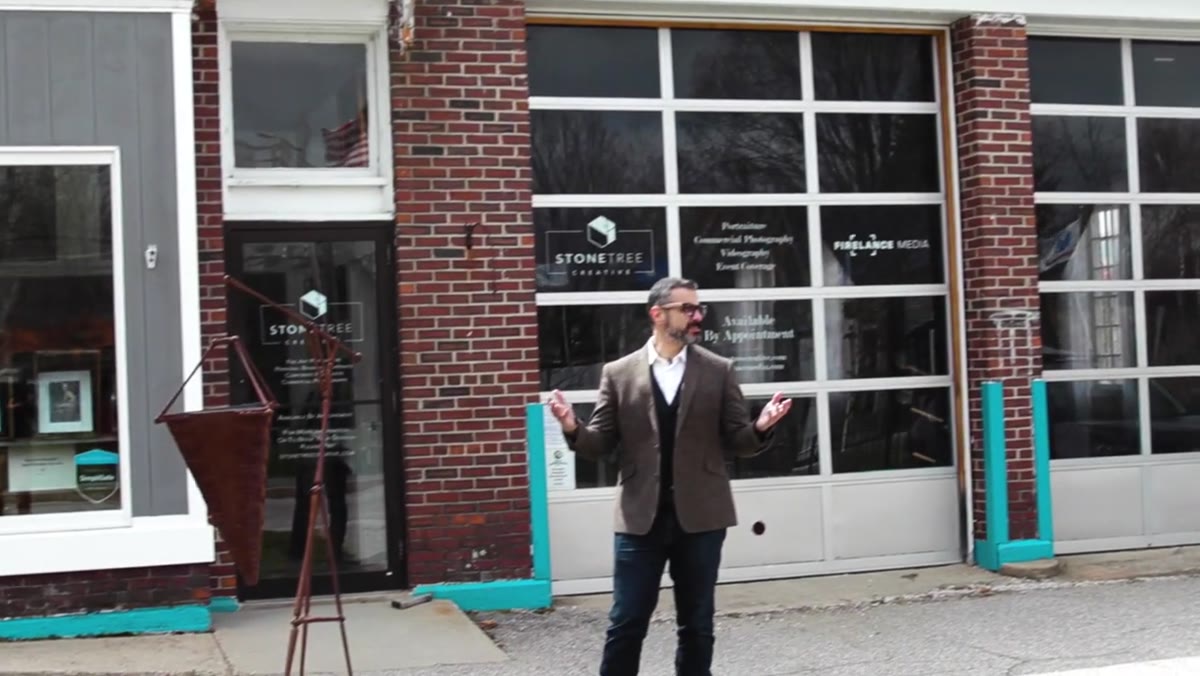 Exterior shot of the converted mechanics garage in Bethel Maine
Stagliano didn’t build a purpose-designed studio from scratch. He took over a building with history baked into it. The mechanics garage had been sitting unused for about fifteen years when he moved in. Rather than gut it, he leaned into what was already there. The garage bay doors became a primary light source. The industrial bones of the building became the aesthetic.
Exterior shot of the converted mechanics garage in Bethel Maine
Stagliano didn’t build a purpose-designed studio from scratch. He took over a building with history baked into it. The mechanics garage had been sitting unused for about fifteen years when he moved in. Rather than gut it, he leaned into what was already there. The garage bay doors became a primary light source. The industrial bones of the building became the aesthetic.
The lesson here transfers directly to how you should think about your own space. Before you spend money trying to neutralize a room into a blank white box, ask what the space already does well. Concrete floors, high ceilings, weathered walls, odd angles - those aren’t problems to fix. They’re character you’d pay a set designer to fake. Start by photographing the space in different light conditions at different times of day. You’ll often discover you have more to work with than you thought.
Step 2: Audit Your Background Before You Pick Up a Camera
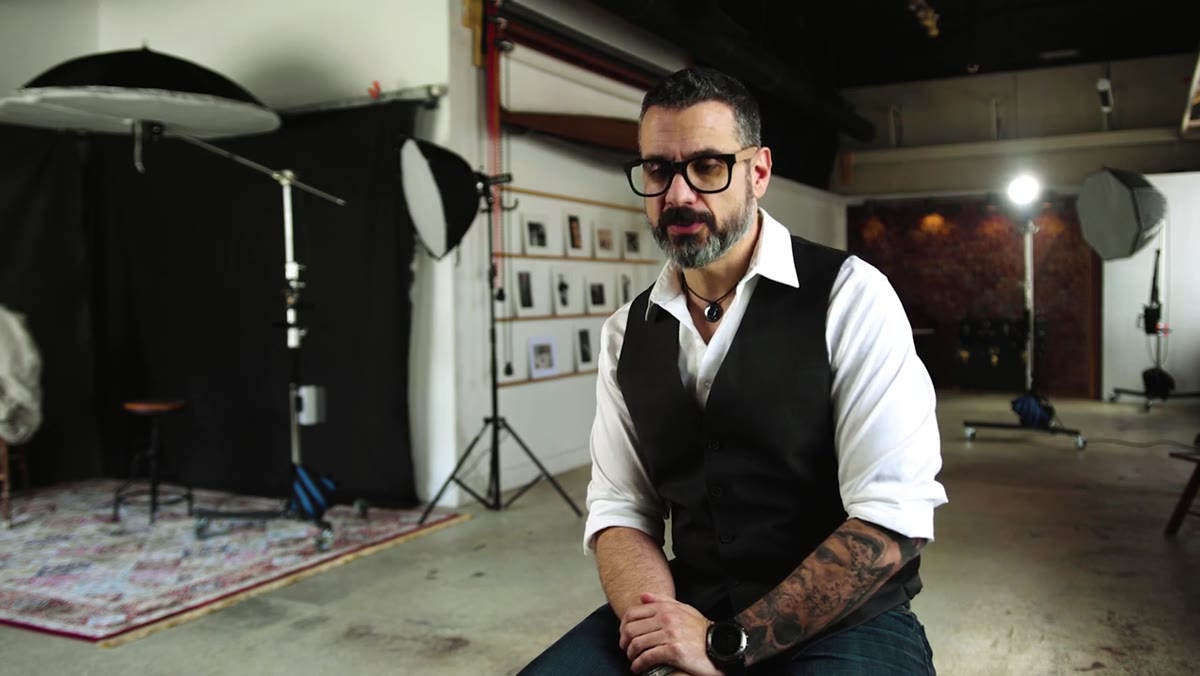
 Matt Stagliano speaking to camera inside the studio space
Stagliano’s pre-photography resume reads like someone threw darts at a career board. Teacher, bouncer, nightclub manager, DJ, IT technician, HR executive, TV host, videographer. He lists them without apology. What’s interesting is how he frames them: not as detours, but as a varied background that shaped how he sees people and communicates with them.
Matt Stagliano speaking to camera inside the studio space
Stagliano’s pre-photography resume reads like someone threw darts at a career board. Teacher, bouncer, nightclub manager, DJ, IT technician, HR executive, TV host, videographer. He lists them without apology. What’s interesting is how he frames them: not as detours, but as a varied background that shaped how he sees people and communicates with them.
If you’re building a portrait business, this matters more than you might think. The skills you carried in from other work, how you read a room, how you manage a nervous client, how you handle the business side without flinching, those come from somewhere. Do an honest audit of what you already know. Stagliano’s corporate background in mergers and acquisitions gave him a level of business literacy that a lot of photographers have to learn the painful way, through failing to sell their work for years before figuring it out.
Step 3: Let Accidental Work Show You Where You Actually Belong
 Matt describing early photography work at the shooting range
The firearms photography chapter of Stagliano’s career started because he brought his camera to a hobby, not because he planned a niche. He was at the range, there was downtime, he took pictures of other students and posted them online. People wanted to buy them. Companies noticed their products in the frames. Editorial work followed.
Matt describing early photography work at the shooting range
The firearms photography chapter of Stagliano’s career started because he brought his camera to a hobby, not because he planned a niche. He was at the range, there was downtime, he took pictures of other students and posted them online. People wanted to buy them. Companies noticed their products in the frames. Editorial work followed.
This is worth sitting with. Some of your best work will come from places you weren’t trying to make a business. If you’re shooting something just because you enjoy it and people keep asking to pay you for it, that’s signal. You don’t have to commit to it forever, but you should pay attention. The market has a way of telling you things your business plan won’t.
Step 4: Recognize When a Niche Stops Serving You
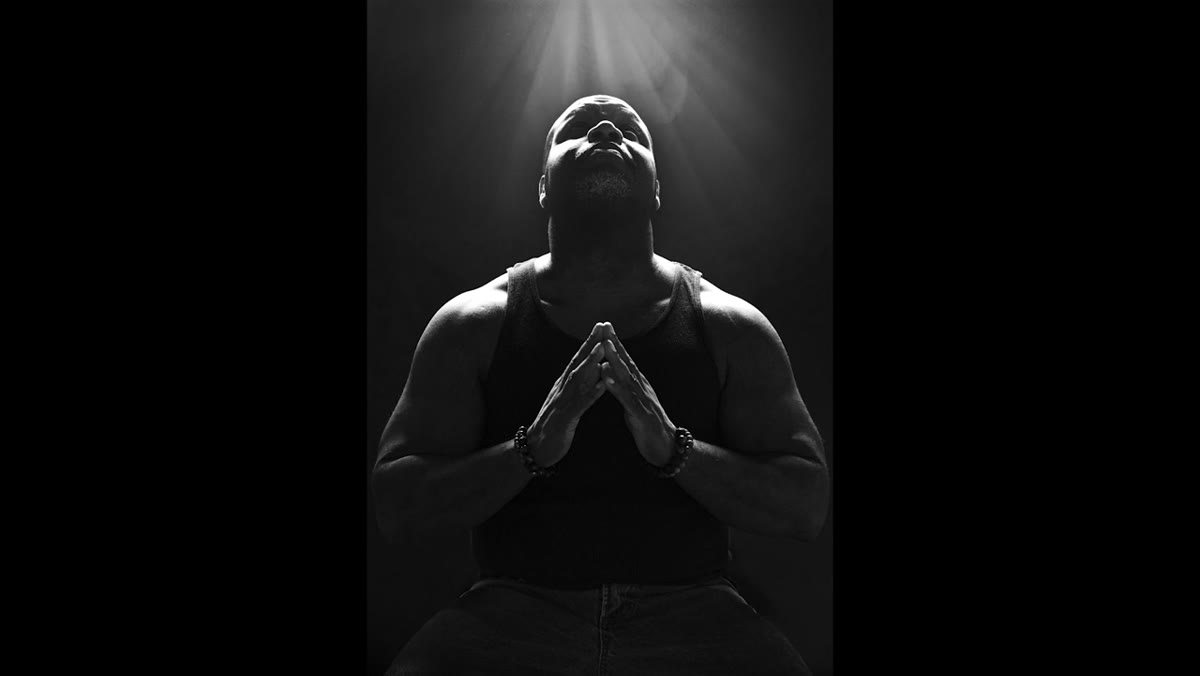 Matt reflecting on the shift away from commercial work toward portraiture
Even with a thriving commercial and editorial business in firearms photography, Stagliano hit a wall. The work was paying but it wasn’t satisfying. He describes realizing that capturing portraits of people gave him something the commercial work didn’t. Connection. Emotion. The feeling of actually being present with another person rather than just documenting a product.
Matt reflecting on the shift away from commercial work toward portraiture
Even with a thriving commercial and editorial business in firearms photography, Stagliano hit a wall. The work was paying but it wasn’t satisfying. He describes realizing that capturing portraits of people gave him something the commercial work didn’t. Connection. Emotion. The feeling of actually being present with another person rather than just documenting a product.
The practical version of this moment, for photographers at any level, is worth naming clearly. Revenue and meaning are not the same metric. Plenty of photographers are making decent money doing work that’s slowly draining them. If you find yourself dreading the jobs that pay well, that’s not laziness. That’s information. Stagliano made a complete pivot in late 2017, which is not a small thing to do when you’ve spent years building a reputation in a specific niche. He did it anyway.
Step 5: Find Your Education Before You Open Your Doors
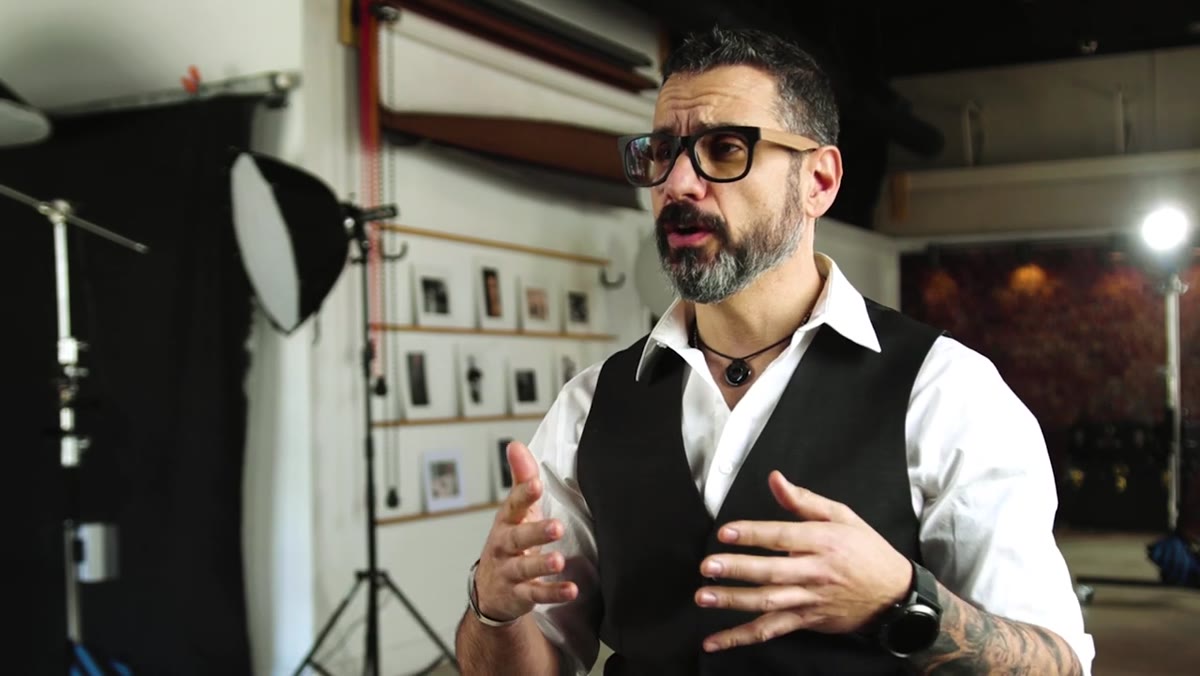 Matt referencing Sue Bryce Education and the decision to join
Stagliano found Sue Bryce through a Creative Live workshop, specifically a natural versus strobe lighting challenge. He was there for the lighting technique. He stayed because of how Bryce approached teaching and client relationships. He joined Sue Bryce Education and opened his portrait studio in mid-2018.
Matt referencing Sue Bryce Education and the decision to join
Stagliano found Sue Bryce through a Creative Live workshop, specifically a natural versus strobe lighting challenge. He was there for the lighting technique. He stayed because of how Bryce approached teaching and client relationships. He joined Sue Bryce Education and opened his portrait studio in mid-2018.
The sequence matters. He didn’t open first and figure it out later. He invested in education, changed his approach to sales and client interaction, and then opened. He’s direct about the fact that his business had been losing money for years because he didn’t know how to sell. Education fixed the thing that all the talent in the world couldn’t. If you’re planning to open a studio and you haven’t seriously studied the sales and client experience side of the business, do that first. The photography skill gap is usually not the problem.
What I’d Add From My Own Experience
The throughline in Stagliano’s story is that he kept following the work that connected him to people, even when the safer or more lucrative path pointed somewhere else. I think about that a lot when I’m deciding which tutorials to write versus which ones would just be easier to produce. Teaching is the part of this work that I’d do for free. I’ve given away entire preset packs because I’d rather 50,000 people use something and learn from it than have it sit behind a paywall. The math looks bad on paper. The work feels right.
Stagliano’s studio tour is ultimately an argument for building around what you actually care about, whether that’s a funky converted garage in rural Maine or a specific kind of portrait that makes your clients cry in the best way. The building is just the container. The work inside it is the point.
The single most important thing this video demonstrates is that every “wrong turn” in your career is material you’ll use later. Stagliano didn’t waste those years in corporate work or firearms photography. He brought all of it with him into the portrait studio. Your own strange resume is an asset, not something to apologize for. Watch the full tutorial on YouTube and take notes on how he talks about the space itself. The way a photographer builds their environment tells you almost everything about how they approach the work.
Comments (2)
I keep coming back to this article. It's that useful.
The tip about from mechanics garage to portr was the missing piece for me. Thank you.
Leave a Comment